

When Things Don’t Go Your Way — and When They Do
When Things Don’t Go Your Way — and When They Do
By JP
In life, we are constantly navigating the tension between planning carefully and trusting deeply. We set goals, prepare for the best and worst, organize our schedules, manage finances, think about our children’s futures — and yet we are also called to hope in God.
We want control.
But we are invited to trust.
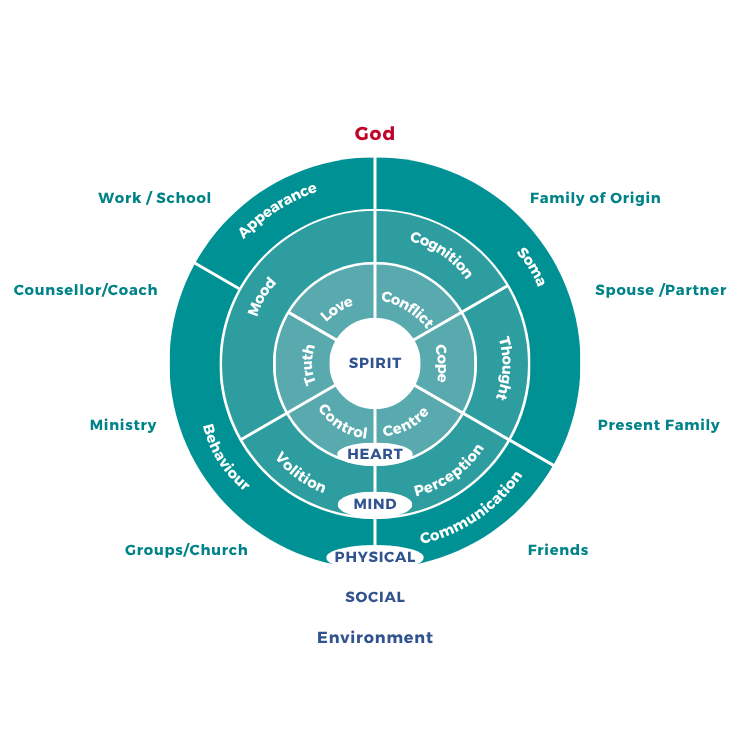
Today, I want to reflect on what Living Wholeness describes as the Control Sector — the part of our lives where we seek safety, certainty, and influence over outcomes. This sector is not wrong in itself. Planning, organizing, and taking responsibility are healthy. But when our need for control becomes our source of security, anxiety rises and hope weakens.
The Control Sector asks:
Who is really in charge of your life?
Joseph: A Life Beyond His Control
When I think about control, I think about Joseph.
So much of his story was outside his control:
Sold into slavery by his own brothers.
Serving faithfully in Potiphar’s house.
Falsely accused and thrown into prison.
Forgotten by those he helped.
Finally raised to become second in command to Pharaoh.
The Bible does not give us detailed insight into Joseph’s emotions during every season. But it repeatedly tells us one thing: “The Lord was with Joseph.”
What strikes me most is not Joseph’s rise to power — but his posture. When Pharaoh asked him to interpret dreams, Joseph responded:
“I cannot do it… but God will give Pharaoh the answer.” (Genesis 41:16)
Joseph did not cling to control.
He did not grasp for credit.
He did not try to secure his own future.
He placed his hope in God.
This was not a naive or blind hope. It was a mature hope — the kind described in Romans 15:13:
“May the God of hope fill you with all joy and peace as you trust in him…”
Joseph’s hope was rooted not in circumstances, but in God’s character.
Hope When Things Don’t Go Your Way
It is easy to talk about surrender when things are going well. But what about when:
You are misunderstood.
You are overlooked.
You are treated unfairly.
Your plans collapse.
A story comes to mind of a young boy with cancer who was asked by a pastor, “Don’t you think God is unfair?” The boy replied, “God has eternity to make it up to me.”
That response reveals a profound hope. He believed that God is just. That God sees. That God’s timeline is larger than this life. That even if things do not feel fair now, God will ultimately make all things right.
That is hope beyond control.
Hope When Things Do Go Your Way
But here is something we often overlook:
Control is not only tested in suffering — it is also tested in success.
What happens when things do go your way?
When your plans succeed.
When doors open.
When influence increases.
When recognition comes.
Do we subtly shift our trust from God to ourselves?
Joseph’s story reminds us that hope is needed in both seasons:
In prison.
In the palace.
In both places, God was in control. And Joseph remembered that.
The Control Sector and Surrender
The Control Sector becomes unhealthy when:
Our peace depends on predictability.
We feel anxious when we cannot manage outcomes.
We struggle to trust God with uncertainty.
We equate control with safety.
True hope is not about passivity.
It is about releasing ultimate control to God while faithfully stewarding what is ours to do.
We plan — but we do not cling.
We act — but we do not grasp.
We prepare — but we trust.
And sometimes, surrender is not dramatic. It is quiet. Daily. Repeated.
“Lord, I release this to You.”
Reflection Questions
Take some time to sit with these:
1. When Things Don’t Go Your Way
How do you usually respond when plans fall apart?
What emotions surface most quickly — anger, anxiety, discouragement, self-blame?
What does this reveal about where your hope is anchored?
2. When Things Do Go Your Way
When you succeed, where does your confidence rest?
Do you subtly rely more on your own ability than on God?
How easy is it for you to give God credit?
3. Your Control Sector
What areas of your life do you most want to control right now? (Family? Ministry? Finances? Health? Reputation?)
What fears are underneath that desire for control?
What would it look like to entrust this area to God — practically, not just spiritually?
4. Eternal Perspective
If God has eternity in view, how does that reshape your current struggle?
What would mature hope look like in your present season?
When Things Don’t Go Your Way — and When They Do Read More »